
Clear answers for important legal and notarial questions.
Practical guidance for international clients navigating real estate closings, property transfers, powers of attorney, document certifications, apostilles, corporate matters and other notarial transactions in Costa Rica.
Costa Rica Notary FAQ for legal and notarial questions.
The Costa Rica Notary FAQ explains common legal and notarial procedures that can involve formalities different from those in the United States, Canada and other jurisdictions.
These Costa Rica Notary FAQ answers provide general guidance for international clients. The exact requirements depend on the document, transaction, parties involved and intended legal use.
For transaction-specific advice, Costa Rica Notary can review the matter and identify the appropriate legal and notarial steps before documents are signed or filed.
Costa Rica notary questions answered.
What does a Notary Public do in Costa Rica?
In Costa Rica, a Notary Public is a licensed attorney with authority to perform legally recognized notarial acts, prepare and authorize public instruments, authenticate signatures and documents, and handle registrable legal transactions when applicable.
Is a Costa Rican Notary also an attorney?
Yes. A Costa Rican Notary Public must be a licensed attorney who also meets the legal requirements to exercise notarial functions in Costa Rica.
Can Costa Rica Notary assist foreign buyers with real estate closings?
Yes. Services may include legal due diligence, title and registry review, closing documentation, transfer deeds, tax and fee coordination, notarial execution and National Registry filing.
Do I need to be physically present in Costa Rica for a property closing?
Not always. Depending on the transaction, a properly structured Power of Attorney may allow a representative to complete certain legal or notarial acts on behalf of a buyer, seller or property owner.
What is legal due diligence in a Costa Rica property transaction?
Legal due diligence typically involves reviewing ownership, liens, mortgages, easements, registry status, corporate ownership where applicable, transaction documents and other legally relevant matters before closing.
What is a Power of Attorney in Costa Rica?
A Power of Attorney is a legal instrument granting another person authority to act on behalf of the principal for specified legal, corporate, real estate or administrative matters.
Can I sign a Power of Attorney outside Costa Rica?
In many situations, yes. The document may need to be executed before the appropriate authority and may also require an apostille or another authentication procedure before it can be used in Costa Rica.
What is document certification?
Document certification is a notarial act through which a Notary Public certifies a copy, signature, document or other legally relevant circumstance according to the applicable legal requirements.
What is the difference between notarization and an apostille?
Notarization is a notarial act performed by a Notary Public. An apostille is a form of authentication used for certain documents intended for use between participating jurisdictions. They are different legal formalities.
When does a Costa Rican document need an apostille?
Whether an apostille is required depends on the destination country, the type of document and the requirements of the receiving authority or institution.
Can foreign documents be used in Costa Rica?
Foreign documents may be used in Costa Rica when the applicable legal, authentication, apostille or other formalities have been completed for their intended use.
Can Costa Rica Notary assist with corporate documents?
Yes. Corporate notarial services may include corporate certifications, Powers of Attorney, signature authentication, company documents, shareholder or representative acts and other legally significant corporate matters.
What is an affidavit or sworn declaration?
An affidavit or sworn declaration is a formal statement in which a person declares facts, information or circumstances for a defined legal, administrative, corporate or transactional purpose.
Can services be coordinated remotely?
Many matters can be coordinated remotely, especially during document review, transaction preparation and international client communication. Whether remote execution is possible depends on the specific legal act and formalities required.
Does Costa Rica Notary provide services in English and Spanish?
Yes. Costa Rica Notary provides bilingual legal and notarial assistance in English and Spanish for Costa Rican and international clients.
Does Costa Rica Notary assist clients throughout Costa Rica?
Yes. Matters may be coordinated throughout Costa Rica, depending on the transaction, documents involved and any location-specific legal or administrative requirements.
Need more than a general answer?
Costa Rica Real Estate Attorney
Explore service → CLOSINGSReal Estate Closing Services
Explore service → AUTHORITYPowers of Attorney
Explore service → DOCUMENTSDocument Certifications
Explore service → INTERNATIONALApostilles & Authentication
Explore service → CORPORATECorporate Notarial Services
Explore service →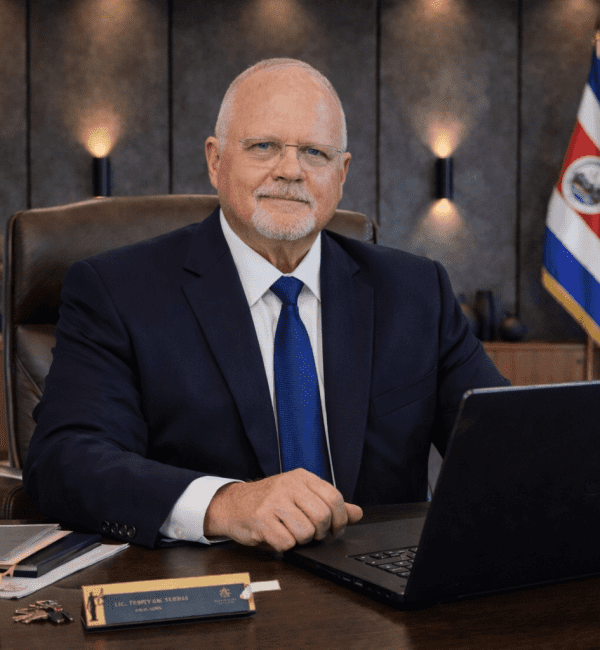
General answers help. Your transaction still deserves review.
The correct legal and notarial procedure depends on the transaction, documents, parties and intended legal result.
The Costa Rica Notary FAQ is supported by the experience of Terry Steele, a licensed Costa Rican attorney and Notary Public providing bilingual legal and notarial services for international clients.
About Terry SteeleGet clarity before you sign.
Speak with a Costa Rican Attorney and Notary Public about your legal or notarial matter in Costa Rica.